
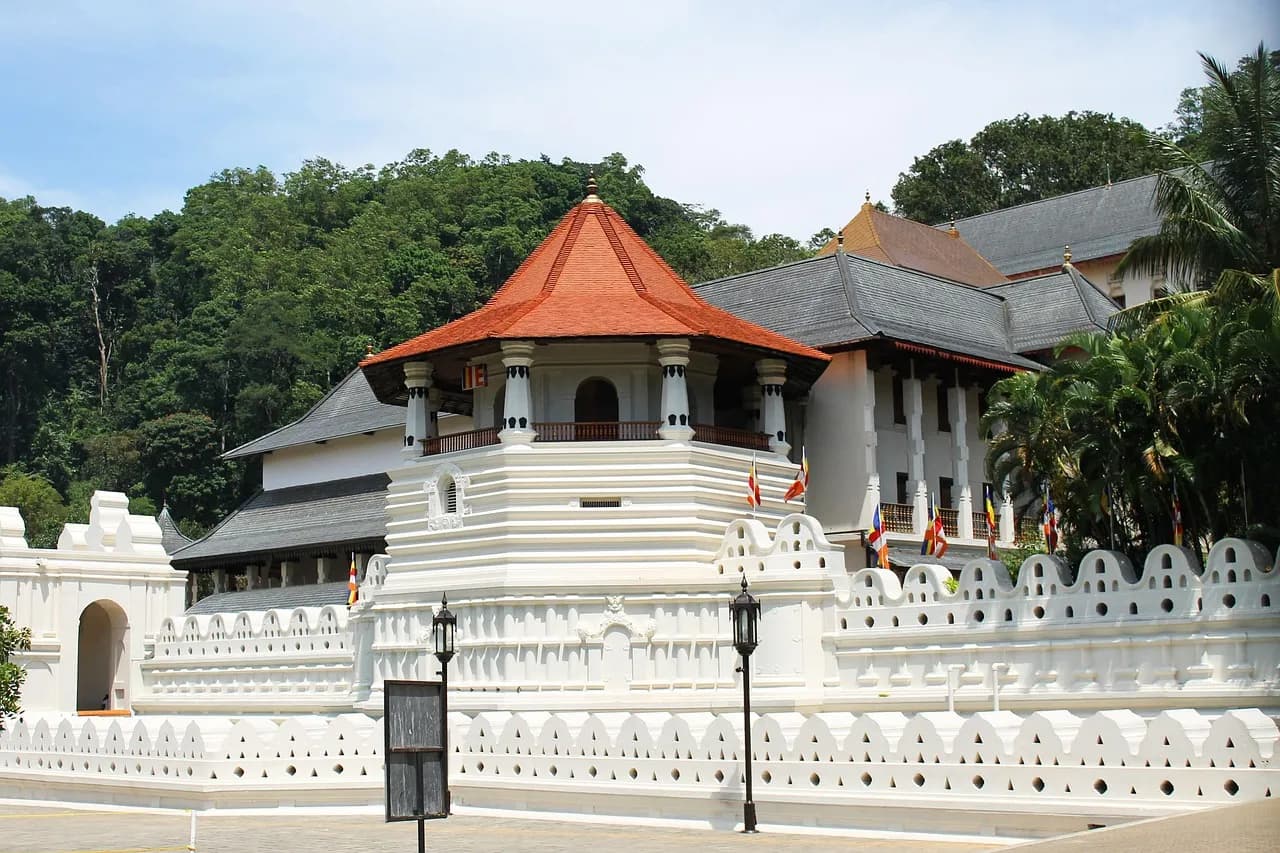
Planning a trip to the Kandy Esala Perahera raises a lot of questions — especially if it is your first time in Sri Lanka. This page answers the most common ones clearly and honestly so you can plan with confidence. If you have a question that is not covered here, the Complete Guide to the Kandy Esala Perahera 2026 goes deeper on every topic.
Key Takeaways
- The 2026 Perahera runs August 18–28 — the biggest night is August 27
- Tickets for grandstand seats are not sold by a central authority — book through licensed operators
- Dress code is modest — covered shoulders and knees for everyone
- The Perahera is safe for tourists and welcoming to visitors of all backgrounds
- Children are welcome and generally love the experience
- No flash photography near elephants under any circumstances
- Most questions about logistics are answered by booking early and staying near the route
Dates & Schedule
When is the Kandy Esala Perahera in 2026?
The 2026 Kandy Esala Perahera runs from August 18 to August 28. The Final Randoli Perahera — the biggest and most spectacular night — is on August 27. The festival closes with the Day Perahera on August 28.
What time does the procession start each night?
Processions typically begin around 8:00pm each night. The exact start time follows traditional lunar and astrological timing and can vary slightly. Be in your viewing position by 6:30pm on regular nights and by 5:30–6:00pm on peak nights (August 26–27).
How long does the procession last?
Most nights the procession takes 2–3 hours to pass completely. The Final Randoli on August 27 can run closer to 3–4 hours due to the increased number of participants.
Which night is the best to attend?
August 27 — the Final Randoli Perahera — is the biggest and most spectacular night. If you can only attend one night, this is the one. August 25 and 26 are also excellent and slightly less crowded. For a more relaxed experience with smaller crowds, nights 1–4 (August 18–21) offer great value.
Is it worth attending multiple nights?
Yes — many visitors attend two or three nights. Each night builds in scale and the atmosphere changes noticeably. A popular combination is attending a mid-festival night (August 23–24) and the Final Randoli (August 27).
Tickets & Seating
Do I need a ticket to watch the Perahera?
Street viewing along the procession route is free — no ticket required. You simply arrive early and find a spot on the pavement. For grandstand seating — elevated reserved seats along the route — you need to purchase tickets in advance through licensed tour operators or your hotel.
Where do I buy grandstand tickets?
There is no single central ticketing authority for Perahera grandstand seats. Tickets are sold through:
- Licensed tour operators in Kandy
- Your hotel concierge
- Perahera package tour providers
Avoid buying from street touts — fake tickets are common on peak nights, particularly August 26 and 27.
What seat types are available?
| Seat Type | What You Get |
|---|---|
| Basic reserved seating | A guaranteed chair on a secondary section of the route, not elevated |
| Second tier grandstand | Raised above street level with clear sightlines, set back slightly |
| Front row grandstand | Elevated tiered seating directly on the route — the best view available |
What each tier costs varies by night and by operator, and peak nights (August 26–27) are always in highest demand. Ask your operator or hotel for a current quote for the specific night you want, and confirm exactly which section and row you are being sold.
How far in advance should I book seats?
For the Final Randoli on August 27 — at least 6–8 weeks in advance. For other nights — 3–4 weeks is generally sufficient, though earlier is always better. Do not leave seat booking until you arrive in Kandy during peak week.
Getting There
How do I get to Kandy from Colombo?
The three main options are:
- Train from Colombo Fort — 2.5–3 hours, scenic, book first class well in advance
- Express bus from Colombo Central Bus Stand — 2.5–3 hours, affordable, no booking needed
- Private transfer — 2.5–3 hours, door to door, book 2–3 weeks ahead during Perahera week
Full details in our Colombo to Kandy Travel Guide.
Can I drive myself to Kandy?
Technically yes but it is not recommended during Perahera week. Parking in central Kandy is extremely scarce, road closures around the procession route begin from around 6pm nightly, and traffic after the procession ends can add 1–2 hours to your journey out of the city. A hired car with a local driver is a far better option.
How do I get around Kandy during the festival?
Kandy is compact and walking is the best option on festival nights. Tuk tuks are available during the day but become scarce after the procession ends. Agree a pickup point with any driver in advance rather than trying to hail one after the procession finishes.
Accommodation
Where should I stay in Kandy for the Perahera?
Stay as close to the procession route as possible — ideally within walking distance of Dalada Veediya. The area around Kandy Lake and the Temple of the Tooth is the most desirable. Full recommendations in our Where to Stay guide.
How far in advance should I book my hotel?
For nights around August 25–27 — at least 3 months in advance. Kandy has limited hotel stock and Perahera week fills it entirely. Earlier nights (August 18–22) have more availability but rates still rise noticeably compared to normal periods.
Do hotel rates go up during Perahera week?
Yes — significantly. Kandy has limited hotel stock and the festival fills it entirely, so rates during peak Perahera week are well above normal. This is standard practice and unavoidable if you want to stay in the city during the festival. Booking early is the single best way to secure a good room before the best-value options are gone.
What to Wear & Bring
Is there a dress code for the Perahera?
Yes. The Perahera is a sacred Buddhist religious event and modest dress is expected:
- Covered shoulders for everyone
- Covered knees for everyone
- Comfortable closed shoes — you will stand for 2–3 hours
- Light layers recommended — August evenings in Kandy can get breezy
What should I bring on the night?
- Cash (most vendors are cash only)
- Water bottle
- Comfortable shoes
- Small front-worn bag for security
- Fully charged phone or camera
- Portable charger if photographing heavily
- Light jacket or scarf
Can I bring a camera?
Yes — photography is welcomed. The key rules are:
- No flash near elephants — prohibited and harmful
- No tripods in crowded street areas — use a monopod instead
- Respect performers and ask before taking close portraits
Full photography guidance in our Photography Tips guide.
Elephants
How many elephants are in the Perahera?
The number increases each night as the festival builds. By the Final Randoli on August 27 there can be up to 100 elephants participating, all elaborately costumed in hand-stitched ceremonial cloths and electric lights.
Are the elephants treated well?
Elephant welfare at the Perahera is a topic of ongoing discussion. The elephants are working animals participating in a high-noise, high-stress environment. Responsible visitors:
- Do not touch or feed the elephants
- Never use flash photography near them
- Observe from a respectful distance
- Avoid making sudden loud noises near them
What is the Maligawa Tusker?
The Maligawa Tusker is the most important elephant in the procession — a large tusked elephant selected for the honour of carrying the golden casket that represents the Sacred Tooth Relic of the Buddha. This elephant is the centrepiece of the entire festival and draws the most attention as it passes.
Safety & Practicalities
Is the Perahera safe for tourists?
Yes. The Kandy Esala Perahera is a well-organised, family-friendly event that welcomes international visitors warmly. Normal city-level precautions apply — keep valuables secure in crowds, be aware of your surroundings, and have your hotel's address saved on your phone.
Is it suitable for children?
Absolutely. Children generally love the Perahera — the elephants, fire performers, and drummers are genuinely magical for young visitors. Practical tips for families:
- Book grandstand seats for more comfort and better sightlines for small children
- Bring something for small children to stand on at street level
- Hold hands in dense crowds and agree on a meeting point
- Consider ear protection for very young children — the drumming is extremely loud
Do I need to be Buddhist to attend?
Not at all. The Perahera warmly welcomes visitors of all backgrounds and faiths. Simply approach it with respect for its religious significance and you will be welcomed.
Is the Perahera affected by rain?
The festival takes place during Sri Lanka's monsoon-adjacent season and rain is possible. The procession continues in light rain — performers and elephants are experienced in all weather conditions. Bring a compact rain jacket just in case. Heavy rain is rare during August in Kandy but not impossible.
Are there ATMs near the procession route?
Yes — there are ATMs in central Kandy near the procession route. However on peak nights (August 26–27) queues at ATMs can be very long. Withdraw cash earlier in the day before the evening crowds build.
Tour Packages
Should I book a Perahera package tour?
For most first-time visitors, yes. A good package tour removes the stress of arranging seats, transport, and accommodation separately — everything is handled. It is particularly good value if you are arriving from overseas and want a smooth, well-organised experience.
See our Best Package Tours for the Kandy Perahera 2026 for a breakdown of what to look for and what is typically included.
What does a typical Perahera package include?
Packages vary but typically include:
- Return transport from Colombo or your base city
- Grandstand seating for one or more nights
- Hotel accommodation in Kandy
- Sometimes a guide who explains the procession as it passes
Still Have Questions?
For a full deep-dive on every aspect of the festival read our Complete Guide to the Kandy Esala Perahera 2026. For specific topics:
- Dates & Schedule — which nights to attend
- Best Seats & Viewing Spots — where to watch
- Where to Stay — accommodation near the route
- How to Get to Kandy — transport options
- First Timer's Guide — everything to know before you arrive