
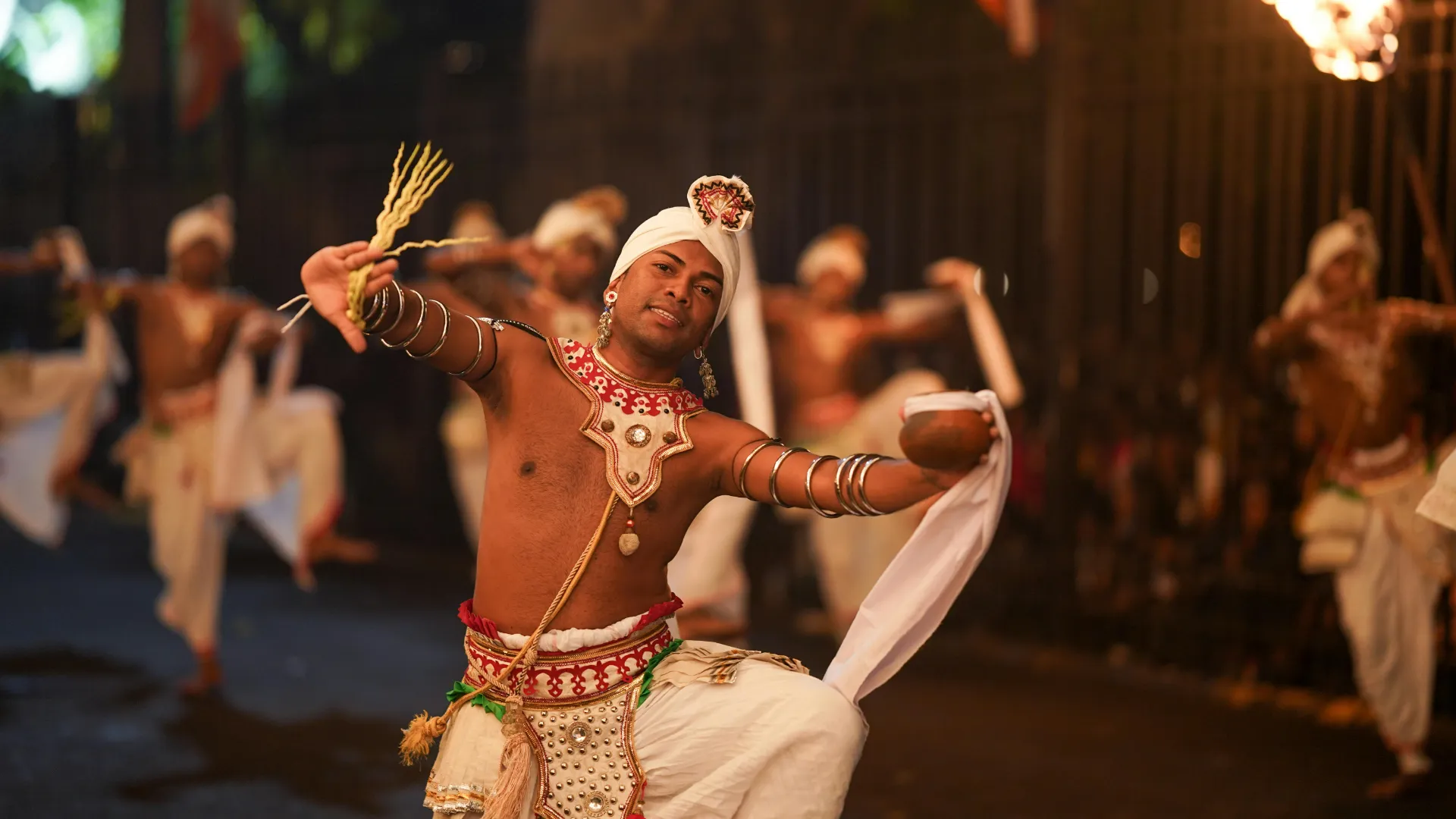
If this is your first time at the Kandy Esala Perahera, you are in for something genuinely extraordinary. Nothing quite prepares you for the moment the drums begin and the first elephant rounds the corner — elaborately costumed, lit up, moving with a slow and ancient dignity through streets packed with thousands of people. This guide covers everything you need to know so you can focus on the experience rather than worrying about logistics.
Key Takeaways
- The Perahera runs August 18–28 2026 — the biggest night is August 27
- Arrive at your viewing spot at least 90 minutes early on peak nights
- Dress modestly — covered shoulders and knees are expected
- No flash photography near elephants — it is prohibited and distressing for them
- Bring cash, water, and comfortable shoes — you will be standing for 2–3 hours
- The procession is a sacred religious event — respectful behaviour is essential
- Book seats, hotels, and transport well in advance — Kandy fills up extremely fast
What You Will Actually See
The Perahera is a procession — it moves past you over the course of 2–3 hours. Here is what passes by in rough order:
Whip Crackers open the procession, clearing the path with loud ceremonial cracks that announce what is coming. The sound is startling the first time.
Torch Bearers follow — men carrying enormous flaming torches that cast dramatic light across the street. This is when you realise just how spectacular the visual experience is going to be.
Kandyan Dancers perform as they walk — intricate footwork, elaborate costumes with headdresses, and the distinctive style of Kandyan classical dance that has been practised for centuries.
Drummers are the heartbeat of the procession. Multiple drumming groups pass throughout the night — the sound builds and builds until you feel it physically. Many first-timers describe this as the most memorable part.
Fire Performers — fire twirlers, fire eaters, and performers spinning burning wheels — add a raw dramatic energy to the procession.
Elephants are the centrepiece. Dozens of elaborately costumed elephants walk the route, their bodies covered in hand-stitched ceremonial cloths decorated with lights. The Maligawa Tusker carries the golden casket representing the Sacred Tooth Relic and is the most important figure in the entire procession.
The Five Devales — groups representing the five Kandyan shrines — each have their own distinct retinue of performers, musicians, and elephants. Spotting the differences between them is something to look out for as the procession passes.
Before You Go — The Checklist
Book in Advance
- ✅ Hotel near the procession route
- ✅ Grandstand seats for your chosen night (especially August 27)
- ✅ Transport to and from Kandy
- ✅ If using a tour package — confirm all inclusions
Pack on the Day
- ✅ Cash — most vendors and ticket holders are cash only
- ✅ Water bottle — staying hydrated in the heat and crowds is important
- ✅ Comfortable closed shoes — you will stand on hard ground for hours
- ✅ Light jacket or layer — August evenings in Kandy can be warm but breezy later
- ✅ Small bag worn at the front — easier to keep secure in crowds
- ✅ Fully charged phone or camera
- ✅ Portable phone charger if you plan to photograph heavily
What to Leave at the Hotel
- ❌ Expensive jewellery — unnecessary in large crowds
- ❌ Large backpacks — cumbersome and a pickpocket risk
- ❌ Flash photography equipment near elephants — prohibited
What to Wear
The Perahera is a sacred Buddhist religious event and modest dress is genuinely expected — not just recommended.
| Body Part | Requirement | Why |
|---|---|---|
| Shoulders | Covered | Religious respect |
| Knees | Covered | Religious respect |
| Footwear | Comfortable, closed | Standing 2–3 hours on hard ground |
| Colours | Any — avoid bright white | White reflects in photos, draws attention |
| Layers | Light layer recommended | Evenings can get breezy |
Loose lightweight trousers and a short-sleeved shirt with a light scarf to cover shoulders works perfectly for most visitors.
Getting There on the Night
Allow more time than you think you need. Kandy transforms on Perahera nights — roads close, crowds fill the streets from mid-afternoon, and tuk tuks become scarce as the evening approaches.
Practical timing guide:
| Night | Arrive at Viewing Spot By |
|---|---|
| Aug 18–22 (early festival) | 7:00pm |
| Aug 23–25 (mid festival) | 6:30pm |
| Aug 26 (near peak) | 6:00pm |
| Aug 27 (Final Randoli) | 5:30pm |
| Aug 28 (Day Perahera) | 1 hour before start |
If you have grandstand seats your spot is reserved — but arriving early still means a better experience, time to settle in, and no rushing through crowds.
During the Procession
Stay where you are. Once the procession starts moving through your section of the route, trying to reposition is difficult and often impossible. Get comfortable before it begins.
Watch for the full range of performers. First-timers often focus entirely on the elephants and miss the extraordinary detail of the dancers, drummers, and ceremonial groups. The whole procession is worth watching — not just the headline acts.
Respect the elephants. Do not reach out to touch them. Do not use flash photography near them. Do not make sudden loud noises. These are working animals in a high-stress, high-noise environment and they deserve respectful distance.
Keep children close. The crowds on peak nights are dense. Hold hands, agree on a meeting point in case you get separated, and consider bringing something for small children to stand on for a better view.
Protect your belongings. Busy festival crowds attract opportunistic theft. Keep your phone in a front pocket, use a crossbody bag worn at the front, and be aware of your surroundings in particularly dense sections.
After the Procession
The streets become very crowded immediately after the procession ends. Here is how to navigate it smoothly:
- Walk if you can — if your hotel is within 15–20 minutes on foot, walking beats waiting for transport
- Agree a pickup point in advance with any driver or tuk tuk — trying to call one after the procession is frustrating
- Wait it out — some visitors find a restaurant or café near their hotel and wait 30–45 minutes for the worst of the crowd to clear
- Stay aware — large moving crowds after a night event require basic situational awareness
Common First Timer Mistakes to Avoid
Arriving too late. The single most common mistake. Underestimating how early you need to be in position — especially on August 26 and 27 — means poor views or no views at all.
Not booking accommodation on the route. Realising your hotel is a 30-minute tuk tuk ride from the procession after you have already booked is a painful situation. Location matters enormously during Perahera week.
Ignoring the earlier nights. Many first-timers fixate only on August 27 and miss the fact that attending an earlier night (August 23–25) gives a fantastic experience with significantly less stress.
Forgetting cash. ATMs near the procession route have long queues on festival nights. Take out cash earlier in the day.
Underestimating the noise. The Perahera is extremely loud — drums, crowds, announcements. If you or anyone in your group is sensitive to noise, ear protection for children is worth considering.
Is It Worth It?
Without question. The Kandy Esala Perahera is one of those rare travel experiences that exceeds expectations. People who have attended describe it as one of the most memorable nights of their lives — and they come back. The combination of the ancient ritual, the scale of the procession, the music, the elephants, and the sheer human energy of tens of thousands of people gathered for something that has continued for centuries is unlike anything else.
Plan carefully, arrive early, dress respectfully, and let it wash over you.
Continue Planning Your Visit
- Kandy Esala Perahera 2026: Dates & Schedule — which nights to attend
- Best Seats & Viewing Spots — where to watch and what to book
- Where to Stay for the Kandy Perahera — accommodation near the route
- Complete Guide to the Kandy Esala Perahera 2026 — the full picture in one place