
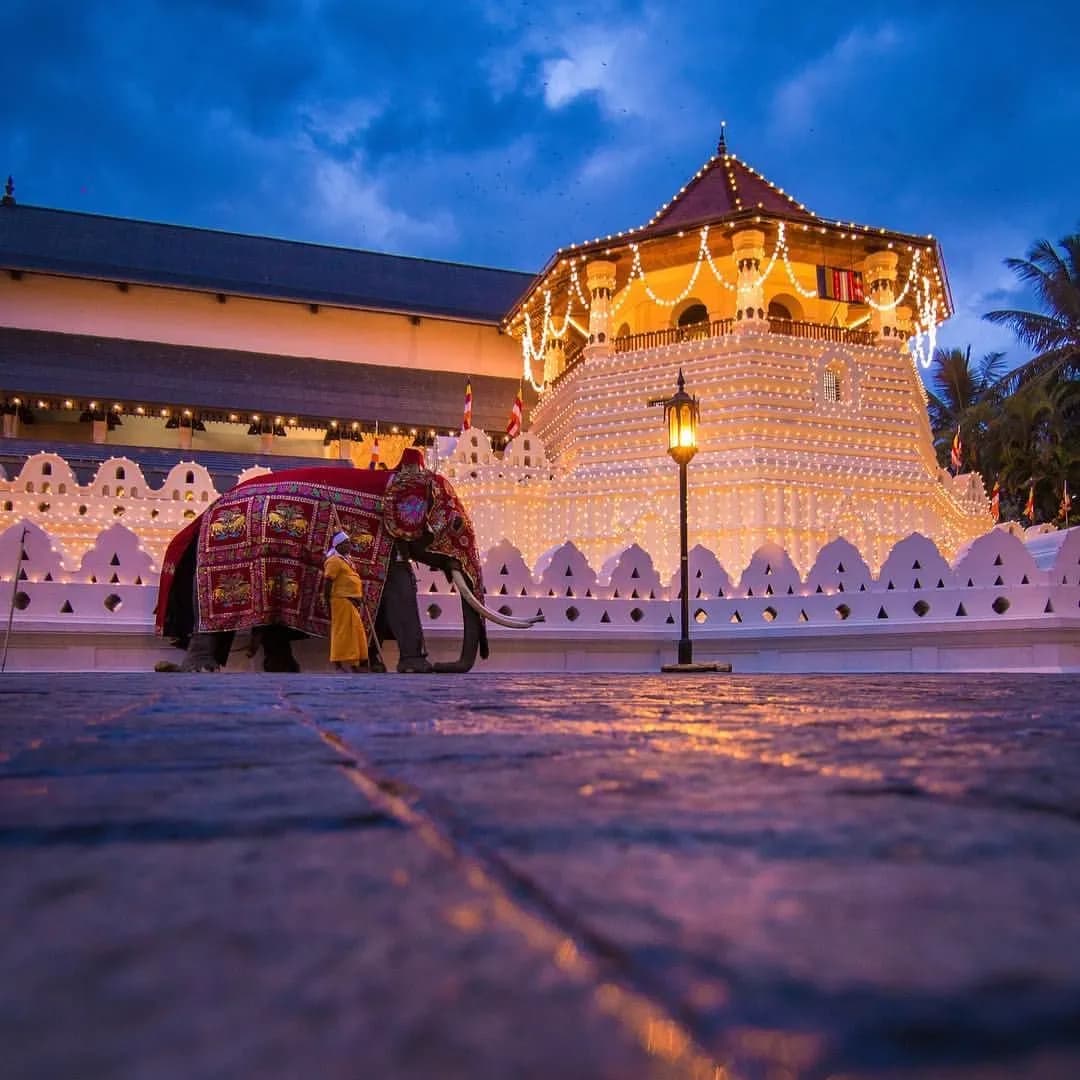
The Kandy Esala Perahera is one of the most photogenic events in Asia — elaborately costumed elephants lit up against the night sky, fire performers trailing light through long exposures, drummers mid-beat with expressions of total concentration. Getting great shots requires preparation because this is a challenging low-light, fast-moving subject. Here is everything you need to know to come home with photographs worth keeping.
Key Takeaways
- No flash photography near elephants — it is prohibited and genuinely distressing for them
- Shoot in RAW format for maximum flexibility in low light editing
- A fast prime lens (f/1.8 or f/2.8) dramatically improves night results
- Front row grandstand seats give the cleanest sightlines for photography
- Set your ISO high — ISO 1600–6400 is normal for Perahera night conditions
- Arrive early to test your settings before the procession begins
- The best light is on the torch-lit sections — position yourself where torches are densest
Understanding the Light
The Perahera takes place at night and the lighting is a mix of:
- Flaming torches carried by torch bearers — warm, dramatic, flickering
- Electric lights on elephant costumes — colorful but inconsistent
- Street lighting along the route — varies significantly by location
- Spotlights used in some grandstand areas
None of this is studio lighting. It is unpredictable, beautiful, and challenging. Embrace the imperfection — some of the most striking Perahera photographs lean into motion blur, dramatic shadows, and the raw energy of available light rather than fighting for technical perfection.
Camera Settings Starting Point
These are starting settings to dial in when you arrive. Adjust based on your specific position and the light available.
| Setting | Recommended Starting Point | Notes |
|---|---|---|
| Mode | Aperture Priority (Av/A) | Gives control over depth of field |
| Aperture | f/1.8 – f/2.8 | As wide as your lens allows |
| ISO | 1600 – 3200 | Increase to 6400 if needed |
| Shutter Speed | 1/100 – 1/250 sec | Faster for sharp dancer/drummer shots |
| White Balance | Auto or Tungsten | Tungsten reduces orange cast from torches |
| Format | RAW | Essential for low light post-processing |
| Autofocus | Continuous AF (AI Servo / AF-C) | Tracks moving subjects |
| Drive Mode | Continuous/Burst | Increases chance of sharp shots |
For motion blur shots (intentional blur on fire performers or dancers):
- Drop shutter speed to 1/15 – 1/30 sec
- Use a monopod to keep the background sharp while subject blurs
Best Gear for the Perahera
Ideal Kit
Fast prime lens — A 50mm f/1.8 or 85mm f/1.8 is the single best upgrade you can make for night event photography. The wide aperture lets in dramatically more light than a kit zoom lens.
Monopod — More practical than a tripod in crowded conditions. Stabilises your camera for slower shutter speeds without taking up the space a tripod requires. Highly recommended.
Extra batteries — Cold nights and heavy shooting drain batteries faster than expected. Bring at least one fully charged spare.
Large capacity memory cards — RAW files are large. A 64GB card minimum for a full night of shooting.
Smartphone Photography
Modern smartphones produce genuinely impressive results in low light with Night Mode. Tips for smartphone shooters:
- Use Night Mode or Pro/Manual mode for more control
- Brace your phone against a stable surface or use a small grip
- No zoom on peak action — move closer physically rather than using digital zoom
- Edit in Lightroom Mobile afterwards for best results
What Not to Bring
- A full tripod — impractical in crowds and annoying for those around you
- A heavy zoom lens — the extra weight and slower aperture is not worth it for this event
- Flash equipment — prohibited near elephants, unhelpful for the overall atmosphere
Best Positions for Photography
Front Row Grandstand
The best position for photography by a significant margin. You have:
- Unobstructed sightlines with no heads in the way
- Elevation above the procession for a slightly different angle
- A consistent distance from the performers as they pass
- Space to change lenses or adjust settings without jostling
Book front row grandstand seats specifically if photography is a priority. See our Best Seats & Viewing Spots guide for booking details.
Street Level Front Row
If you are watching from the street, arriving early enough to secure a front row position gives you ground-level shots that have their own drama — looking up at elephants from street level produces striking perspective.
The challenge is unpredictability — people move in front of you, lighting varies, and you have less control over your shooting conditions.
Hotel Balcony
If you have booked a hotel room with a balcony overlooking the procession route you have a unique elevated perspective that most photographers do not get. Slightly further from the action but with complete freedom to move, set up a monopod properly, and shoot without any crowd interference.
What to Photograph
The Elephants
The obvious subject — but go beyond the full body shot. Look for:
- Close-up detail of the embroidered costume cloth
- The Maligawa Tusker carrying the golden casket — the most important elephant
- Eye contact — a close shot of an elephant's eye surrounded by costume detail is powerful
- Scale — a wide shot showing an elephant against the crowd conveys the scale of the event
The Drummers
Drummers are one of the most photographically rewarding subjects at the Perahera. A fast shutter speed (1/250 sec+) freezes a drummer mid-strike with an expression of total focus. A slower shutter (1/30 sec) blurs the drumstick into a streak of motion. Both work beautifully.
Fire Performers
Long exposure (1/15 – 1/30 sec) on fire twirlers creates trails of light that are genuinely stunning. Use a monopod to keep the background sharp. This is one area where the imperfect, experimental approach produces the most memorable results.
The Crowd
Do not forget the audience. Faces lit by torchlight, children on shoulders straining to see, the mass of humanity stretching down the street — the crowd is part of the story of the Perahera and some of the most affecting photographs from the event focus on the people watching rather than the procession itself.
Etiquette and Rules
No flash near elephants. This is the most important rule and it is strictly enforced. Flash photography startles and distresses elephants — it is prohibited and disrespectful. Use available light only.
Be aware of those around you. In grandstand seating especially, raising a large camera or monopod that blocks the view of the person behind you is inconsiderate. Be mindful of your footprint.
Respect the religious significance. The Perahera is a sacred event. Photographing it is welcomed but approaching it with the attitude of a respectful observer rather than an aggressive paparazzo makes for a better experience for everyone — and often better photographs.
Ask before photographing people. If you want a close portrait of a performer or festival-goer, a smile and a gesture asking permission is both respectful and often results in a more relaxed, natural shot.
Editing Your Perahera Shots
RAW files from night events need post-processing. A basic edit workflow:
- Exposure — lift shadows to recover detail in dark areas
- White balance — cool down the orange torch cast if needed, or embrace it for warmth
- Noise reduction — high ISO produces grain; Lightroom's AI noise reduction handles this well
- Clarity and texture — adds detail to costume embroidery and drum skin texture
- Crop — tighten compositions that were hard to frame perfectly in the moment
Plan Your Full Visit
Great photographs start with good planning — the right seat, the right night, and enough time to settle in before the procession begins.
- Best Seats & Viewing Spots for the Kandy Perahera — where to position yourself
- Kandy Perahera First Timer's Guide — everything to know before you arrive
- Kandy Esala Perahera 2026: Dates & Schedule — choosing the right night
- Complete Guide to the Kandy Esala Perahera 2026 — the full picture in one place