
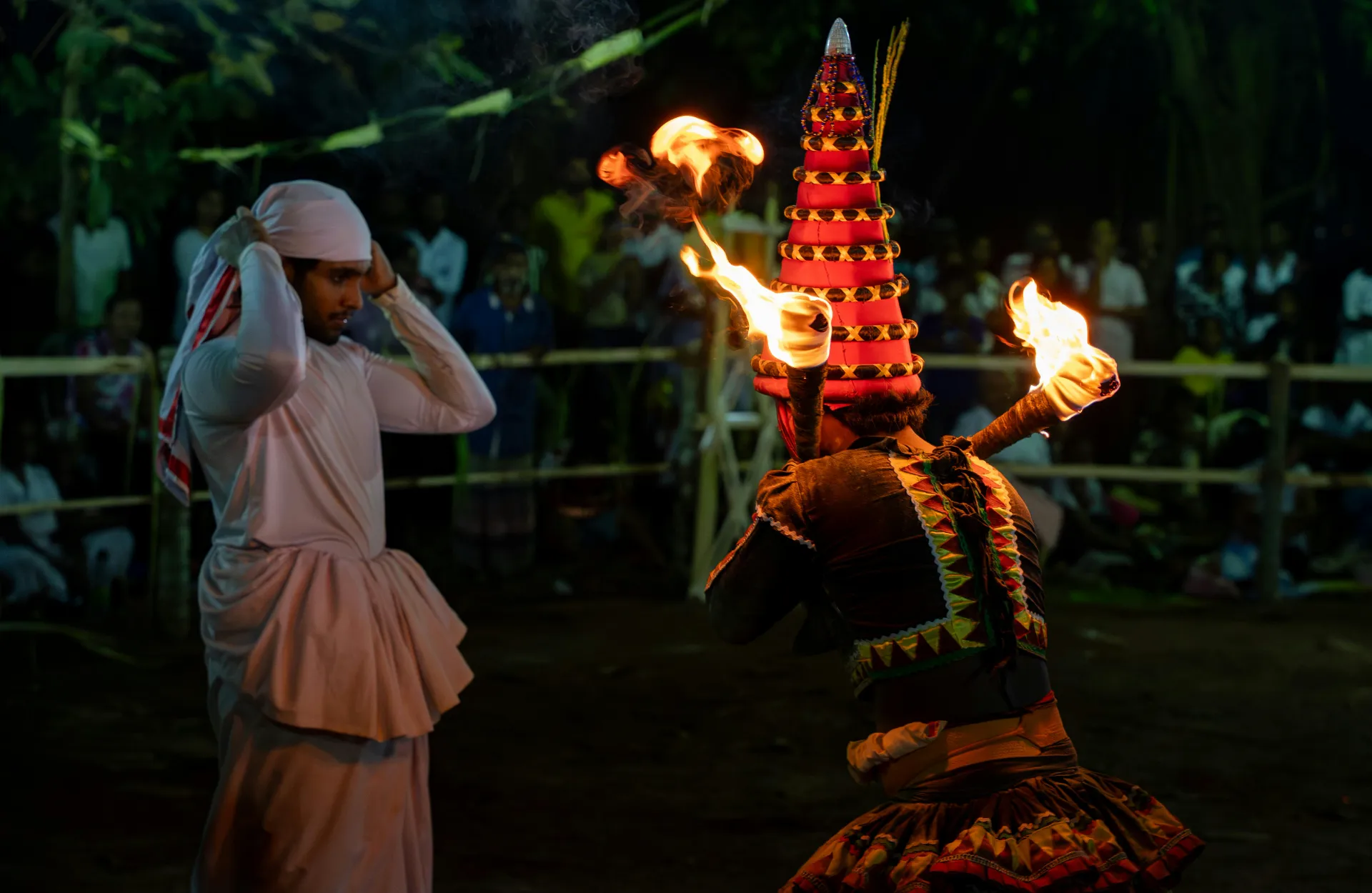
The 2026 Kandy Esala Perahera runs from August 18 to August 28. The festival builds in scale and spectacle every night, reaching its peak on the Final Randoli Perahera on August 27 before closing with the Day Perahera on August 28. Knowing which nights to attend — and what to expect on each — makes all the difference in planning a trip worth remembering.
Key Takeaways
- Festival runs August 18–28, 2026 — 10 nights plus a closing day ceremony
- Two phases: Kumbal Perahera (Aug 18–21) and Randoli Perahera (Aug 22–27)
- Processions begin around 8:00pm nightly and last approximately 2–3 hours
- August 27 is the Final Randoli — the biggest, most spectacular night
- August 28 is the Day Perahera — a daytime closing ceremony, shorter but unique
- The festival grows in size each night — more elephants and performers as it progresses
- Book everything early — hotels and seats sell out weeks before the peak nights
Full 2026 Nightly Schedule
| Night | Date | Phase | What to Expect |
|---|---|---|---|
| Night 1 | Aug 18 | Kumbal Perahera | Opening night, smaller scale, less crowded |
| Night 2 | Aug 19 | Kumbal Perahera | Procession grows slightly |
| Night 3 | Aug 20 | Kumbal Perahera | Good mid-week option, manageable crowds |
| Night 4 | Aug 21 | Kumbal Perahera | Final Kumbal night |
| Night 5 | Aug 22 | Randoli Perahera | Scale increases noticeably |
| Night 6 | Aug 23 | Randoli Perahera | More elephants, more performers |
| Night 7 | Aug 24 | Randoli Perahera | Crowds begin to build significantly |
| Night 8 | Aug 25 | Randoli Perahera | One of the busiest nights |
| Night 9 | Aug 26 | Randoli Perahera | Near-peak atmosphere |
| Night 10 | Aug 27 | Final Randoli | Maximum scale — do not miss this |
| Day | Aug 28 | Day Perahera | Closing ceremony, daytime, unique atmosphere |
The Two Phases Explained
Kumbal Perahera — August 18 to 21
The opening phase of the festival. The procession is smaller in scale compared to the later nights but still genuinely impressive — this is not a warm-up act, it is a full procession with elephants, dancers, and drummers.
The advantages of attending Kumbal nights:
- Smaller crowds — easier to find good street viewing spots
- Better accommodation availability — more choice and better rates before peak week
- Relaxed atmosphere — less chaotic, easier to navigate the city
- Still spectacular — elephants and performers are present from night one
If you're travelling on a budget or are sensitive to large crowds, attending nights 1–4 is a smart choice.
Randoli Perahera — August 22 to 27
This is when the festival truly comes alive. The procession grows each night — more elephants are added, more performer groups join, and the Sacred Tooth Relic casket carried by the Maligawa Tusker becomes the centrepiece of the entire event.
By August 25 the streets are packed. By August 27 — the Final Randoli — the atmosphere is electric. This is the night that people fly across the world for.
The Final Randoli — August 27
The Final Randoli Perahera on August 27 is the climax of the entire festival. Everything builds to this night:
- The maximum number of elephants — up to 100 adorned in elaborate costumes and lights
- All five Kandyan Devales (shrines) participate with their full retinues
- The Maligawa Tusker carries the golden casket housing the Sacred Tooth Relic
- Thousands of performers — dancers, drummers, fire twirlers, whip crackers
- The procession can last 3–4 hours on this night
If you can only attend one night, August 27 is the answer. Book your seats and hotel for this night first, then plan everything else around it.
The Day Perahera — August 28
The Day Perahera is the closing ceremony of the festival, held in daylight on August 28. It is shorter and less theatrical than the night processions but offers something the night shows cannot — you can actually see everything clearly.
What makes it worth attending:
- Intricate elephant costumes visible in full detail
- Ceremonial rituals that are harder to observe at night
- Significantly smaller crowds than peak nights
- A calmer, more reflective atmosphere
Many visitors who attend the Final Randoli on August 27 stay an extra night to catch the Day Perahera on August 28 — a perfect way to end the experience.
What Time Does the Procession Start?
Processions typically begin around 8:00pm each night. However the exact start time can vary slightly depending on the phase of the moon and traditional astrological timing — the Perahera follows a lunar calendar.
Practical advice:
- Be in your seat or viewing spot by 6:30pm on regular nights
- Be in position by 6:00pm on August 26 and 27 — crowds arrive very early on peak nights
- The procession route along Dalada Veediya takes approximately 2–3 hours to pass completely
Which Night Should You Attend?
| Your Priority | Best Night(s) |
|---|---|
| Best spectacle, maximum scale | August 27 (Final Randoli) |
| Good experience, smaller crowds | August 19–21 (Kumbal) |
| Easier to arrange, still impressive | August 18–20 |
| Unique daytime experience | August 28 (Day Perahera) |
| Attending multiple nights | Aug 24 + Aug 27 |
How Long Should You Stay in Kandy?
For most first-time visitors, 3 nights in Kandy is the sweet spot:
- Night 1: Arrive, settle in, explore Kandy Lake and the Temple of the Tooth
- Night 2: Attend a mid-festival procession (Aug 24–26)
- Night 3: Final Randoli on August 27, Day Perahera on August 28 morning
If your schedule allows, arriving a day or two before the festival starts gives you time to explore Kandy without the festival crowds — the city is beautiful and worth seeing at a slower pace.
Plan the Rest of Your Visit
Once you have your dates sorted, the next steps are locking in your seats and accommodation:
- Best Seats & Viewing Spots for the Kandy Perahera — where to sit and what to book
- Where to Stay for the Kandy Perahera 2026 — hotels near the procession route
- How to Get to Kandy for the Perahera — transport from Colombo and beyond
- Complete Guide to the Kandy Esala Perahera 2026 — everything in one place