
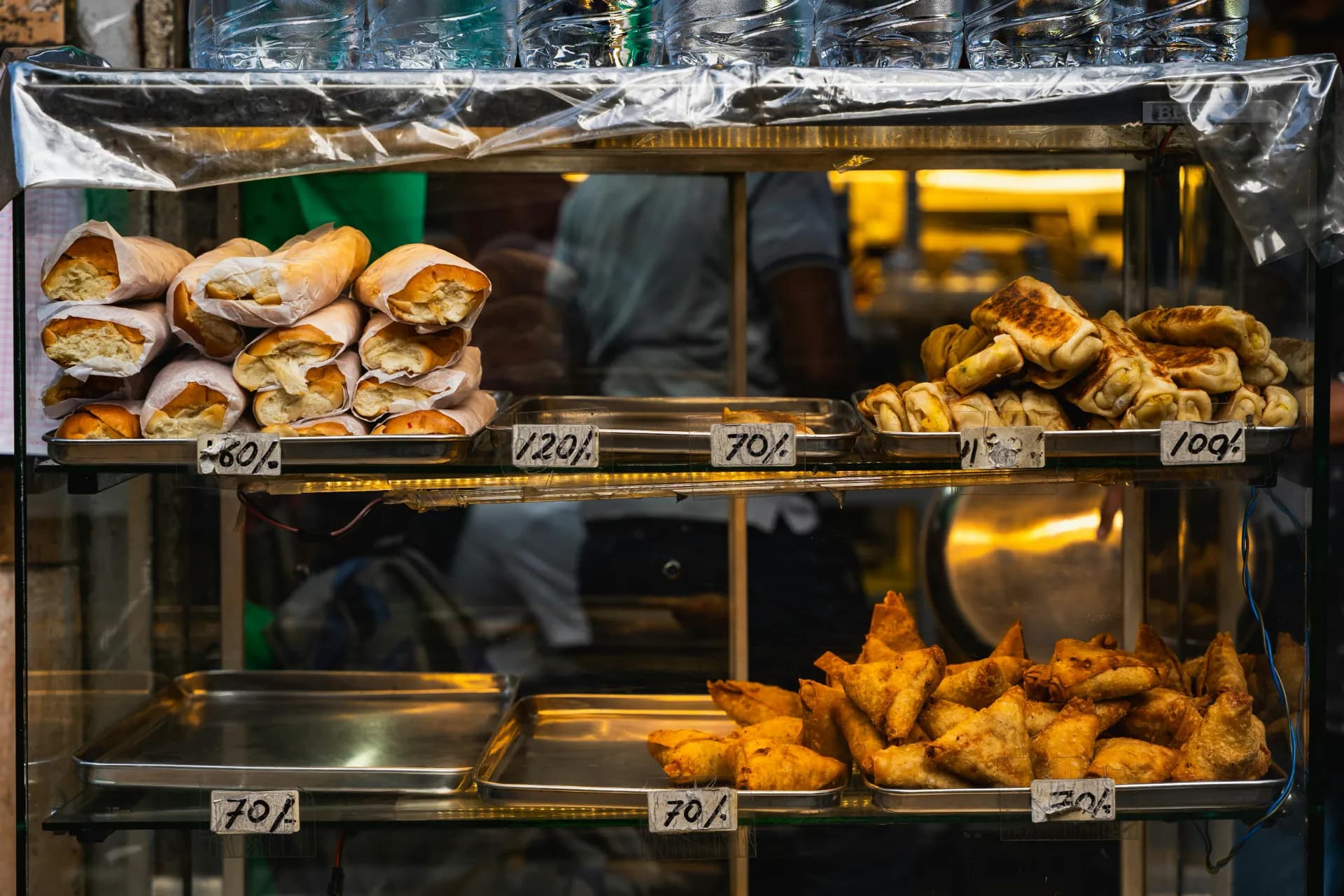
Sri Lanka has one of the great undiscovered street food cultures in Asia. It is not as famous as Thailand or Vietnam but it deserves to be — the flavours are extraordinary, the variety is impressive, and the experience of eating at a roadside kade (small shop) or watching kottu roti being chopped on a sizzling griddle at midnight is one of the most memorable things you can do in Sri Lanka. This guide covers everything you need to eat, where to find it, and how to do it confidently as a first-time visitor.
Key Takeaways
- Kottu roti is the definitive Sri Lanka street food experience — do not leave without trying it
- Hoppers are the essential Sri Lankan breakfast — a bowl-shaped rice flour pancake unlike anything else
- Sri Lankan food is spicier than most visitors expect — ask for mild if you are sensitive to heat
- Rice and curry is the national dish and available everywhere for as little as LKR 200–400
- Street food in Sri Lanka is generally safe to eat — follow basic hygiene instincts and you will be fine
- Colombo, Kandy, and Galle Fort have the best concentration of street food options for tourists
- Most street food costs between LKR 150 and LKR 500 — extraordinarily good value
The Essential Sri Lanka Street Foods
Kottu Roti — The King of Street Food
If you eat one thing in Sri Lanka make it kottu roti. Chopped flatbread (roti) stir-fried on a hot griddle with vegetables, egg, and your choice of chicken, beef, or seafood — the sound of the metal blades chopping rhythmically on the iron griddle is one of the defining sounds of Sri Lankan nights.
Every kottu stall has its own style and seasoning — the best ones develop a devoted local following. It is filling, deeply flavourful, and served fresh off the griddle.
Where to find it: Everywhere — roadside stalls, small restaurants, and dedicated kottu shops throughout the country. Most active from evening through late night.
What to order:
- Cheese kottu — with melted cheese mixed through, a popular variation
- Egg kottu — the most common version, eggs scrambled through the mix
- Chicken kottu — the most popular meat option
- Godamba kottu — made with thinner, flakier roti for a different texture
Price: LKR 300 – 600 depending on filling
Hoppers (Appa) — The Essential Breakfast
Hoppers are bowl-shaped pancakes made from fermented rice flour and coconut milk, cooked in a small rounded pan that gives them their distinctive shape — crispy and lacy at the edges, soft in the centre. They are eaten for breakfast throughout Sri Lanka and are unlike anything in any other cuisine.
Types of hoppers:
| Type | Description | Best With |
|---|---|---|
| Plain hopper | Simple bowl shape, crispy edges | Coconut sambol, curry |
| Egg hopper | Egg cracked into the centre while cooking | Lunu miris (onion sambol) |
| Milk hopper | Coconut milk added for sweetness | Jaggery (palm sugar) |
| String hoppers | Steamed rice noodle discs, not bowl-shaped | Coconut milk curry, dhal |
Where to find them: Hopper restaurants open early morning and often close by 10am — this is a breakfast food. Look for small local restaurants with queues of locals outside.
Price: LKR 20 – 60 per hopper
Rice and Curry — The National Dish
Rice and curry is not street food in the conventional sense — but it is the most important dish in Sri Lankan cuisine and available at roadside restaurants, market stalls, and small kades throughout the country for extraordinarily little money.
A proper Sri Lankan rice and curry is a plate of rice surrounded by multiple small dishes — typically a protein curry (chicken, fish, or dhal), two or three vegetable curries, coconut sambol, and papadum. Each curry has its own distinct flavour profile and the combination eaten together is greater than the sum of its parts.
What to expect:
- Banana leaf service is common in traditional restaurants — the food is served directly on the leaf
- Eating with your right hand is traditional and encouraged
- The curries are genuinely spicy — ask for mild (or "not spicy") if you are sensitive to heat
- Unlimited rice refills are standard at most local restaurants
Price: LKR 200 – 500 at a local restaurant
Pol Sambol — The Essential Condiment
Not a dish in itself but the condiment that accompanies almost everything in Sri Lankan cuisine. Freshly grated coconut mixed with red onion, dried chilli, lime juice, and Maldive fish (dried tuna) — it is intensely flavoured, slightly spicy, and completely addictive.
Pol sambol appears alongside hoppers at breakfast, with rice and curry at lunch, and with bread in the evening. Once you have eaten it you will want it with everything.
Wade (Vada) — The Street Snack
Crispy deep-fried lentil fritters, eaten as a snack throughout the day. Crunchy outside, soft inside, served hot with coconut sambol or chutney. Found at roadside stalls, bus stations, and markets everywhere.
Types:
- Ulundu wade — made from black lentils, the most common type
- Isso wade — topped with a whole prawn, a popular coastal variation
- Parippu wade — made from yellow lentils, slightly softer texture
Price: LKR 30 – 80 per piece
Roti — The Versatile Flatbread
Flatbread cooked on a griddle, eaten at any time of day. Sri Lankan roti is thicker and doughier than Indian roti — more substantial and filling.
Common variations:
- Coconut roti (pol roti) — flatbread made with grated coconut mixed into the dough, eaten for breakfast with sambol
- Dhal roti — filled with spiced lentils
- Egg roti — folded around a fried egg and vegetables, a filling snack at any hour
Price: LKR 60 – 150
Isso Vadai — Prawn Fritters
A specialty of the north and coastal areas — crispy lentil fritters topped with whole prawns, deep fried until golden. The Jaffna-style version is particularly famous. Found at coastal street stalls and markets.
Price: LKR 80 – 150 per piece
Kola Kenda — The Breakfast Porridge
A traditional Sri Lankan herbal porridge made from rice, coconut milk, and green leaves — eaten for breakfast, particularly in rural areas and among older generations. Deeply nourishing, subtly flavoured, and increasingly popular among health-conscious travellers.
Found at traditional breakfast stalls early morning — look for the green-coloured porridge being served from large pots.
Price: LKR 100 – 200
Watalappan — The Sri Lankan Dessert
A rich coconut custard pudding made with jaggery (palm sugar), coconut milk, eggs, and spices — the definitive Sri Lankan dessert. Dense, sweet, and deeply flavoured with the distinctive caramel notes of jaggery. Found at restaurants and sweet shops throughout the country.
Price: LKR 150 – 300
Where to Eat — By City
Colombo
Colombo has the widest variety of street food options and the best concentration of good eating for tourists.
Pettah Market area — the most authentic street food experience in Colombo. Wade stalls, fruit sellers, kottu shops, and small Muslim-owned restaurants serving rice and curry. Busy and chaotic — go during the day.
Galle Face Green promenade — street food stalls set up along the seafront from late afternoon. Isso wade, kottu, corn on the cob, fresh fruit. Perfect at sunset with the sea breeze.
Kotahena — Sri Lanka's Chinatown area, interesting food culture mixing Sri Lankan and Chinese influences.
Wellawatte — a Tamil neighbourhood in south Colombo with excellent South Indian influenced street food including dosai and vadai.
Kandy
Kandy Market — the covered market near the bus stand has excellent local food stalls serving rice and curry, hoppers, and short eats. Busy at lunch time.
Kandy Lake area — several good kottu and roti stalls operating from evening onwards along the roads surrounding the lake.
During the Perahera (August 18–28) — street food vendors multiply dramatically during festival week. The streets around the procession route fill with food stalls from late afternoon — a great opportunity to try a wide variety of Sri Lankan snacks in one place. See our Kandy Esala Perahera Complete Guide for more on the festival.
Galle
Galle Fort — the fort interior has a growing food scene with restaurants and cafes catering to international visitors. Good for sit-down meals rather than street food specifically. The fort is busiest and at its best between December and March, when the south coast is in season — see our Best Time to Visit Sri Lanka guide for how the island's two monsoons shape the calendar.
Galle Market — outside the fort walls, the local market area has authentic Sri Lankan street food at local prices. Rice and curry, wade, and short eats.
Unawatuna — the beach strip has numerous small restaurants serving fresh seafood, kottu, and rice and curry at reasonable prices.
Ella
Ella's main street has a concentrated strip of small restaurants catering to travellers — kottu, roti, rice and curry, and fresh fruit all available within a short walk. Prices are slightly higher than local towns due to the tourist concentration but still very affordable by any international standard.
Short Eats — Sri Lanka's Snack Culture
Short eats is the Sri Lankan term for a category of small savoury snacks sold at bakeries and roadside stalls throughout the day. They are the perfect grab-and-go food for travelling between destinations.
Common short eats:
| Snack | Description | Price (LKR) |
|---|---|---|
| Fish bun | Soft bread roll filled with spiced fish | 40 – 80 |
| Vegetable roll | Fried pastry roll filled with vegetables | 40 – 80 |
| Patties | Flaky pastry filled with fish or chicken | 50 – 100 |
| Cutlets | Crumbed and fried fish or meat balls | 50 – 100 |
| Chinese roll | Deep fried roll with egg and vegetable filling | 60 – 100 |
Every town in Sri Lanka has at least one bakery selling short eats. They are fresh in the morning and throughout the day — avoid anything that looks like it has been sitting out for hours.
Street Food Safety Tips
Sri Lanka street food is generally safe to eat and stomach problems from street food are less common than in some other Asian destinations. Common sense precautions:
- Eat where locals eat — a busy stall with high turnover means fresh food
- Hot food is safer — freshly cooked off the griddle is always the safest option
- Avoid pre-cut fruit left sitting in the heat for extended periods
- Drink bottled water — do not drink tap water or add ice of unknown origin to drinks
- Trust your instincts — if a stall looks dirty or the food looks old, move on
- Start mild — if you are not used to spicy food, ask for less chilli at first and build up gradually
Vegetarian and Vegan Eating
Sri Lanka is an excellent destination for vegetarian and vegan travellers. The cuisine is naturally plant-forward — most rice and curry spreads include multiple vegetable dishes, dhal curry is ubiquitous, and coconut features in almost everything.
Reliable vegetarian options everywhere:
- Dhal curry (parippu) — spiced red lentils, a staple at every meal
- Jackfruit curry (polos) — young jackfruit cooked as a meat substitute, extraordinary
- Coconut roti with pol sambol
- Plain and egg hoppers
- Vegetable kottu
- All varieties of wade
Useful phrase: "Mas nehe" (Sinhala) = "No meat" — useful when ordering at local restaurants.
A Note on Spice
Sri Lankan food is genuinely spicy — more so than most visitors expect and significantly hotter than typical Indian restaurant food outside of South Asia. The heat comes primarily from fresh green chillies, dried red chillies, and black pepper used liberally in almost every dish.
If you are sensitive to spice:
- Always ask "not spicy" or "mild please" when ordering
- Coconut sambol and pol sambol both have chilli — ask for less
- Coconut milk in curries reduces heat — dishes described as "white curry" are milder
- Plain rice, coconut roti, and string hoppers are mild and safe as a base
Budget Guide
Sri Lanka street food is remarkable value by any international standard.
| Meal | Where | Cost (LKR) | Cost (USD approx) |
|---|---|---|---|
| Rice and curry (local restaurant) | Market kade | 200 – 400 | 0.70 – 1.30 |
| Kottu roti | Street stall | 300 – 600 | 1.00 – 2.00 |
| Hoppers (3–4) with sambol | Breakfast stall | 150 – 250 | 0.50 – 0.85 |
| Wade (2 pieces) | Roadside stall | 60 – 160 | 0.20 – 0.55 |
| Short eats (2–3 pieces) | Bakery | 120 – 300 | 0.40 – 1.00 |
| Fresh coconut | Street vendor | 80 – 150 | 0.27 – 0.50 |
| Full day eating (street food only) | Various | 800 – 1,500 | 2.70 – 5.00 |
Eating entirely from street stalls and local restaurants you can feed yourself extraordinarily well in Sri Lanka for USD 5–8 per day.
Continue Exploring Sri Lanka
- Sri Lanka First Timers Travel Guide — complete practical guide for planning your trip
- Best Places to Visit in Sri Lanka — where to go beyond the food
- Best Time to Visit Sri Lanka — when to travel, month by month
- Sri Lanka Safari Guide — wildlife and national parks